Maintenance of your curnicciolu
HOW TO MAINTAIN YOUR CURNICCIOLU? WHAT YOU NEED TO KNOW:
A folding knife can be washed with warm water and silverstone but should be dried immediately.
Carbon steel and damascus carbon blades are traditional steels.
They are known for their excellent cutting... but they naturally oxidize when in contact with moisture or acidic foods, and can rust if not well maintained.
Maintenance tips:
- Clean the blade with a cloth or a damp sponge, never soaked.
- Always wipe immediately after washing.
- Absolutely avoid abrasive pads (Scotch-Brite) that scratch the blade.
- To revive a tarnished blade: use silverstone, or a cork soaked in a bit of cold wood ash (and a bit of elbow grease!).
- In case of prolonged non-use, grease the blade with a neutral grease (like silicone grease for faucets).
🛑 A carbon or damascus blade does not like stagnant water or prolonged humidity.
🧼 General cleaning
A folding knife is washed with warm water and a bit of silverstone, then dried immediately with a soft cloth.
Never let it soak.
Natural handles: horn, stag, ivory
These are living and fragile materials:
Never expose your handle to direct heat (radiator, fireplace, car in direct sunlight).
Do not immerse horn handles, at risk of cracking them.
Lightly oil (every 1 to 2 months) with a food-grade oil to prevent drying.
The horn is made of keratin, like nails: this explains its diversity of color and its moderate maintenance needs.
Wooden handles (regional or exotic)
Wood is a noble but sensitive material:
You can rinse it under a stream of cold water, but do not soak it.
In case of dry or dull wood: apply beeswax with a soft cloth to nourish it and restore its beautiful patina.
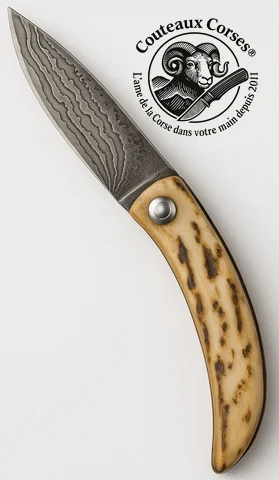
FREE Personalize your Corsican knife

With every purchase of a knife, stylus, or case, you are OFFERED the engraving of your initials or your first name.
Just let us know your engraving choice in the 'Comments and special instructions' section of the order form...
Re-mounting or tightening the blade of a knife
It can happen that the blade becomes loose. Just hammer the two ends of the axis until you achieve the desired resistance. You can be quite forceful: the horns and wood used by our knife makers are very strong.
Sharpening the blade of your curnicciolu knife
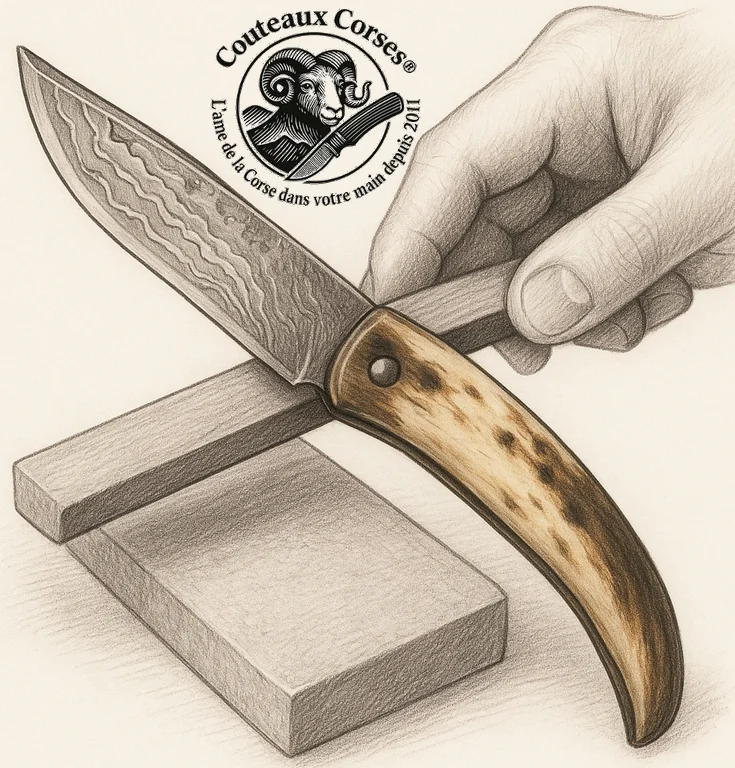
There are two complementary operations to maintain the cutting edge of a knife:
1. Sharpening:
This allows for the renewal of the edge, meaning to reform the sharpness of a dull blade.
2. Honing:
This involves maintaining the edge, meaning to straighten the sharpness without removing material. To be done regularly, between two sharpenings.
The angle and the method
Keep a constant angle of 20° to 30° between the blade and the stone or honing rod.
Do not apply too much pressure, but work regularly.
The movements should be calm and controlled: going too fast increases the risk of cutting yourself or scratching the blade.
Set aside only a few minutes for each operation, but they require a bit of practice.
➡️ Before practicing on your new knife, train on an old one.
Sharpening: instructions
Sharpening is done with:
a water stone (recommended for knives),
or an electric water stone (if it is perfectly round and suitable for cutlery).
➤ Before use:
Soak the stone for 10 minutes in cold water, possibly with a few drops of vinegar.
Use a medium-grit stone (avoid honing stones, which are too coarse for knives).
➤ The right move:
Mimic the motion of slicing a thin slice against the stone, while maintaining the correct angle.
Alternate sides: one stroke on one side of the blade, then the other.
Regularly re-moisten the stone during sharpening.
💡 Tip: Secure the stone on a workbench using clamps to free your hands and make a smoother, safer motion.
Honing: regular maintenance
Honing is done with a quality honing rod, ideally:
magnetic,
about 25 cm in length,
and equipped with a safety guard.
Whether round, oval, or flat, the technique remains the same:
Position the blade at the heel of the rod, side of the rod.
Slide the blade down towards the guard, as if you were cutting the rod.
Repeat the motion while alternating sides of the blade.
🛠️ Additional maintenance tips
🔩 If your blade becomes loose:
Just gently hammer the ends of the axis (rivet) until you regain good resistance.
No worries: the horn or wood handles used by cutlers are very strong.
🌧️ In case of stains or oxidation
Carbon steel blades are sensitive to natural oxidation (acids, moisture, air). If the blade tarnishes or shows rust:
Simple solution:
Rub with fine steel wool (000) soaked in olive oil, or use silver stone.
This will restore a satin finish, otherwise the original appearance.
⚠️ This type of maintenance applies to everyday knives.
🧴 For display knives or those used infrequently
Protect the blade and handle with a soft cloth lightly oiled (neutral oil or camellia oil).
Store them away from direct light and moisture.